Remove-Wake-Effects
This process removes wake effects from all met masts in the workbook. In order for this to work, the following conditions must be met:
- All met masts must be associated with their own WRG
- All WRG must be adjusted to their met masts (i.e, the WRG directional probabilities and wind speeds must match the met mast at the met mast location and height(s)
- All met masts must contain the same length of record (i.e. start and end dates must match)
- All met masts must have the same valid time stamps
- The energy capture must be setup to use time-series energy capture with the same date range as in the met masts and use the same time interval (if the conditions above have been met then the auto-range dates button can be used).
The above is a somewhat onerous list but really no more onerous than the requirements to run a proper time-series energy capture.
If some wind farms are commissioned, decommissioned or repowered during the period of record of the met masts, the commissioning and decommissioning dates can be set in each site layer. In cases where turbine types have been changed (such as repowering). The original site layer should have its decommissioning date set and then the repowered wind farm should be setup as a separate site layer with its appropriate commissioning date. Turbines can be placed close to each other, or even in the same position, so long as they are marked as “fixed”.
The process to remove wake effects runs using the current energy capture settings. It creates a tiny (1m rotor diameter) turbine at each met position and instrument height. Such “sensor turbines” are ignored by the wake models in Openwind when it comes to creating wakes. However, they do experience the wakes from other turbines and so they can be used to assess the wake effect on the met mast wind speeds and turbulence intensity estimates. For each time step, the reduction in wind speed and the increase in TI are calculated at each sensor turbine and then a correction is applied to the met mast time-series data with the aim that the corrected met mast data, when waked, should recreate the original met mast data. This is an iterative process and can take several runs of the energy capture although the first pass generally gets very close to the final solution.
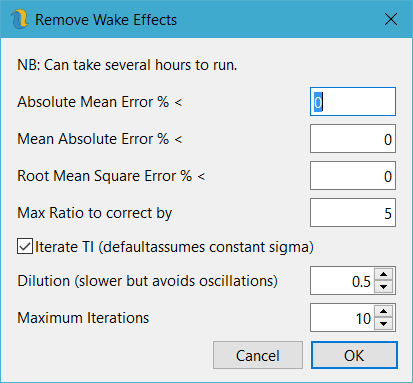
Figure 181: Remove wake effects settings
The first three settings are stopping conditions. These can all be set to zero if the user wants to get as close as possible to perfect wake remove in the given number of iterations.
Max Ratio – is the maximum correction ratio which can be applied in any one iteration.
Iterate TI – this option uses a pragmatic approach to getting back to the unwaked turbulence intensity. Instead of attempting to back out the wake induced TI (which becomes complicated) it uses the same iterative approach as that used to converge on the unwaked velocity.
Dilution – this is a way to avoid oscillations. See below.
Maximum iterations – this is the maximum number of iterations to run the wake removal process.
The wake removal code has the following structure.
For each mast
   For each time step
       For each met mast height
           if(z<=GetTopInstrumentLevel())
                  ratioV = (targetV/max(trbV,0.4) + dilution)/(dilution+1.0)
           newV = currentV*ratioV
           newV = minmax(newV, targetV, currentV*MaxRatio)
where:
- minmax(a, b, c) is a function that returns the value of a limited to greater than or equal to b and less than or equal to c;
- targetV is the original met mast data value that we want the waked wind speed to equal;
- trbV is the current value of the waked wind speed at the met mast location for this height;
- currentV is the current value of the modified wind speed at the met mast;
- ratioV is the ratio which we are applying to the current to make trbV closer to targetV;
- and newV is the value with which we will replace currentV.