Pseudo-Equivalent-Loads
This is an attempt to go some way into coming up with a single overall loads ratio for each turbine as well as potentially loads ratios for individual Wohler exponents which could, to a limited extent, represent a component made of a material with that Wohler exponent.
Whilst this does not incorporate anything about the structure of the turbine itself, it can be useful as a single metric comparing the effective TI at the turbine to the standard curve.
In figure 147, the procedure involves looping through values of the Wohler exponent, one at a time from 3 to 14, and for each value of the Wohler exponent, we loop through wind speeds from 3 to 25 m/s. For each turbine, for each value of wind speed and Wohler, we calculate sigma as in Effective Turbulence Intensity and raise sigma to the Wohler exponent before multiplying by the probability of that wind speed. These values are calculated for each value of wind speed and then summed over all wind speeds to give the site pseudo-equivalent load (PEL). The design PEL is calculated using the IEC reference curve together with the probabilities determined by the reference wind speed and reference Weibull shape parameter.
The PEL loads ratio for each value of teh Wohler exponent is the ratio of the site PEL over the design PEL.The overall PEL loads ratio is the maximum value of the PEL loads ratio over all values of the Wohler exponent.
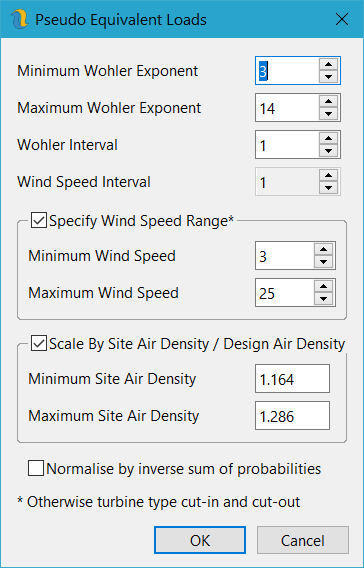
Figure 148: Pseudo-Equivalent Loads Parameters
Minimum Wohler Exponent - the first value of the Wohler exponent for which to evaluate the Pseudo-Equivalent Loads (PELs).
Maximum Wohler Exponent - the last value of the Wohler exponent for which to evaluate the Pseudo-Equivalent Loads (PELs).
Wohler Interval - the step by which we loop from minimum to maximum value of the Wohler exponent.
Wind Speed Interval - the amount by which to increment the wind speed for each successive loop.
Minimum Wind Speed - the lowest value of the wind speed to consider.
Maximum Wind Speed - the higher value of the wind speed to consider.
Scale By Site Air Density / Design Air Density - this attempts to take account of the site air density compared to the reference air density.